Grade 8 Learns About Brazilian Favelas
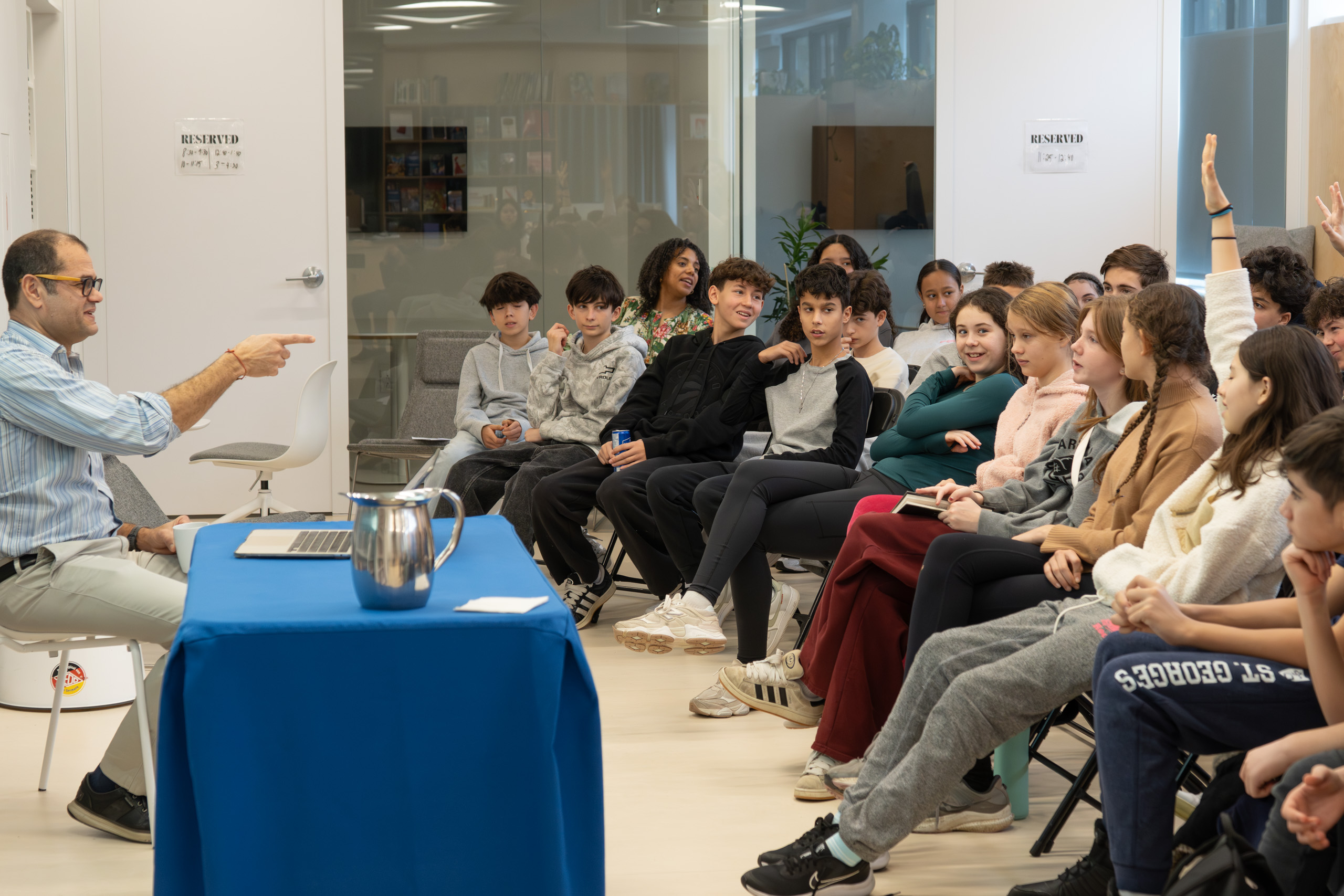
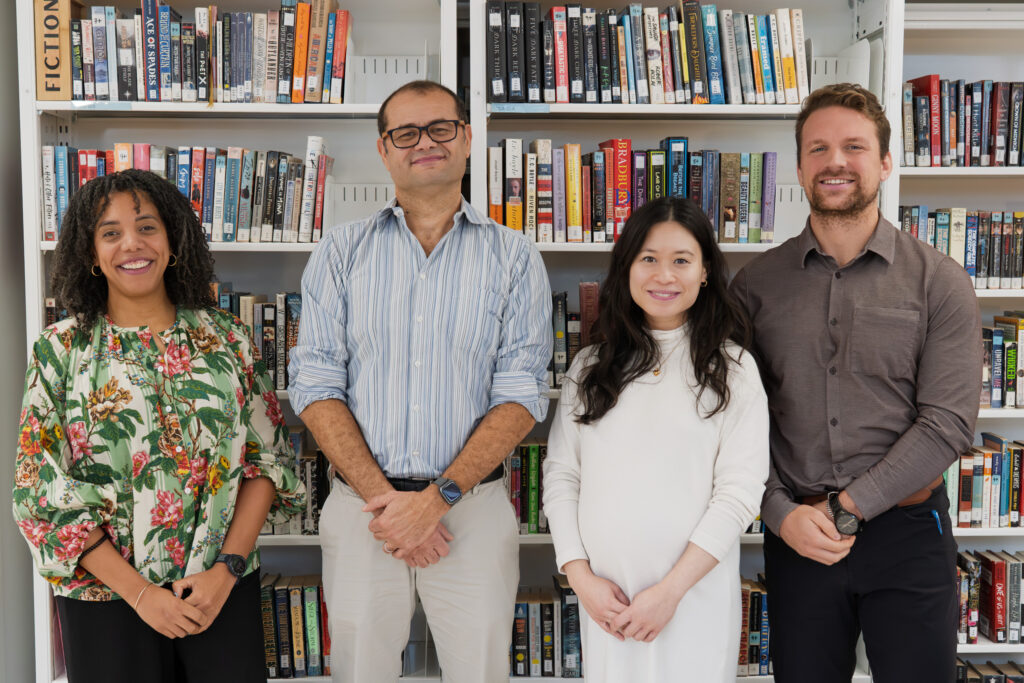
As part of their Geography unit on quality of life in large cities, Grade 8 students welcomed parent, Rogerio Da Paixao (Artemis ’29; Zoe ’27) to the Learning Commons. An economist from Brazil with expertise in poverty, environmental issues, and data analysis, Mr. Da Paixao shared firsthand knowledge of Brazilian favelas. Delving into their history, culture, and socio-economic challenges, he helped students connect urban sprawl, housing, and inequality to real life.
What is a Favela?
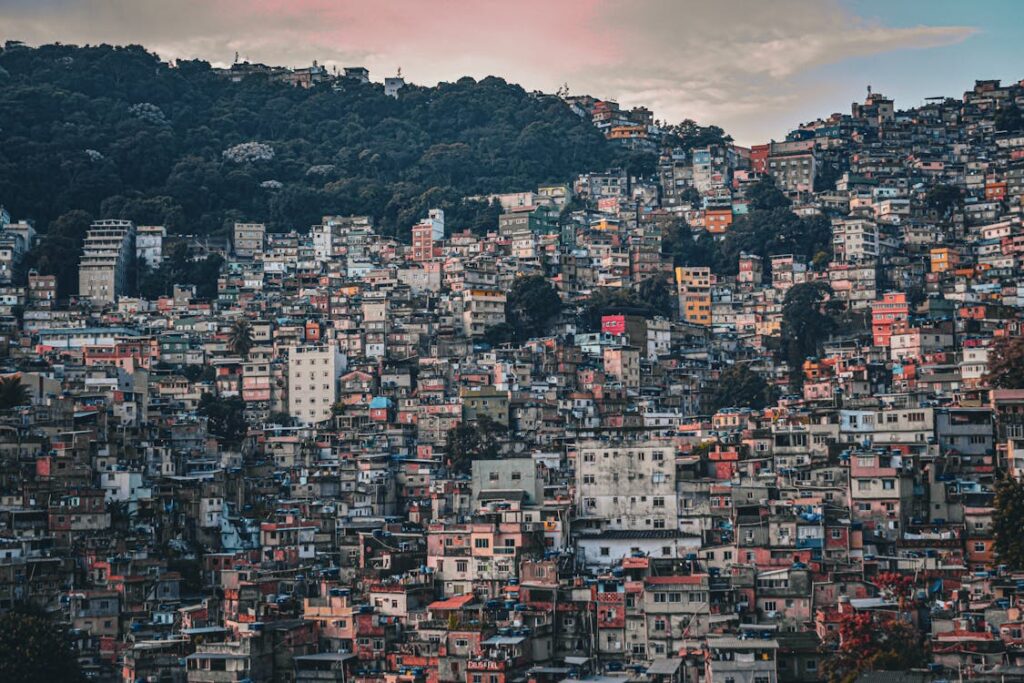
Mr. Da Paixao began by asking students what came to mind when they heard the word “favela.” Many mentioned crowded houses on steep hillsides, narrow alleys, and high crime. The product of rapid, often disorganized urbanization and deep socio-economic inequality in Brazilian cities, Da Paixao underlined systemic issues like limited access to basic services like sanitation, accessibility, and clean water. Students discovered that some favelas are the size of small cities and compared this to the population density, housing reality, and access to resources in Montreal.
Challenging Stereotypes
One of the key themes of the presentation was challenging stereotypes. Mr. Da Paixao contrasted how people from the affluent parts of the city often view favelas with how residents see their own communities. For many outsiders, favelas are associated with poverty, violence, and drug trafficking. For residents, they also represent joy, friendship, a strong sense of community, and hope.
Students asked thoughtful questions about safety, discrimination, and the daily realities of life. This led to a rich discussion about opportunity, access to education, and the kinds of support that can help young people break cycles of poverty.
“The best question I got was about whether kids in favelas could ever make their way out of poverty. The reality is that there are way fewer opportunities for them.They have to put in a huge effort to make it out, but it can be done.”
— Rogerio Da Paixao, Economist
Community and Culture
Mr. Da Paixao highlighted how people in favelas organize initiatives to improve their communities. He shared examples of community centres, neighbourhood associations, partnerships with NGOs, local entrepreneurship, and community gardens that provide food, work, and safe gathering spaces. Students also learned that favelas are vibrant cultural hubs. Many well-known Brazilian artists, authors, and athletes were born and raised there, and musical styles like samba, funk, and rap have deep roots in these communities. This helped students see favelas not only as sites of struggle, but also as centres of creativity, resilience, and pride.
Bringing the Learning Back Home
By the end of the session, students were making connections between Brazilian favelas and issues closer to home: housing affordability, access to green spaces, the impact of climate change, and the role of government and citizens in shaping cities. The presentation gave students a better understanding of what it could take to build a fairer city. It deepened their understanding of urban geography and social justice, and reminded them that behind every map and statistic is a community of people with stories, challenges, and hopes for a better future.
Interested in St. George’s?
Learn more about our school and be the first to hear about upcoming events.
[YEAR ROUND] General Optins
Elementary School Campus
3685 The Boulevard
Westmount, QC H3Y 1S9
High School Campus
3100 Le Boulevard
Montréal, QC H3Y 1R9
Admissions
514-904-0542
admissions@stgeorges.qc.ca




© 2026 | Terms of use | Privacy policy | Code of Ethics