Rooted Here: Weaving Indigenous Perspectives into Our Curriculum
Special Feature by Directors of Teaching and Learning Dani Jansen, High School and Laura Officer, Elementary School
As we continue to build a progressive, current curriculum and live out our school’s Statement of Commitments, we have asked ourselves an important question: In a wonderfully diverse school community, why do we dedicate specific time and focus to Indigenous perspectives?
Our answer is rooted in pedagogy, history, and our responsibility as an educational community.
Land and Heritage
To understand why Indigenous perspectives occupy a unique space in our curriculum, we must look at the relationship between culture, language, and place. For nearly every heritage represented in our vibrant school community, there is a geographic home elsewhere in the world where that culture’s language is actively spoken, where its knowledge systems are taught in schools, and where its written and oral literatures are thriving.
This land, however, is the only place on Earth where the languages, stories, and knowledge systems of the First Nations, Inuit, and Métis peoples originate. As educator and author Jo Chrona writes in Wayi Wah! Indigenous Pedagogies:
“This is the only place in the world where the languages of the First Nations of this place exist, where the literatures of Indigenous peoples spring from, where the knowledge systems of First Nations here are rooted in the land. If their languages cease to be spoken here, if the knowledges and perspectives are not taught and learned here, they do not exist elsewhere in the world. If not here, then where?”
— Jo Chrona, Author and Educator
Progressive Education and Indigenous Ways of Knowing
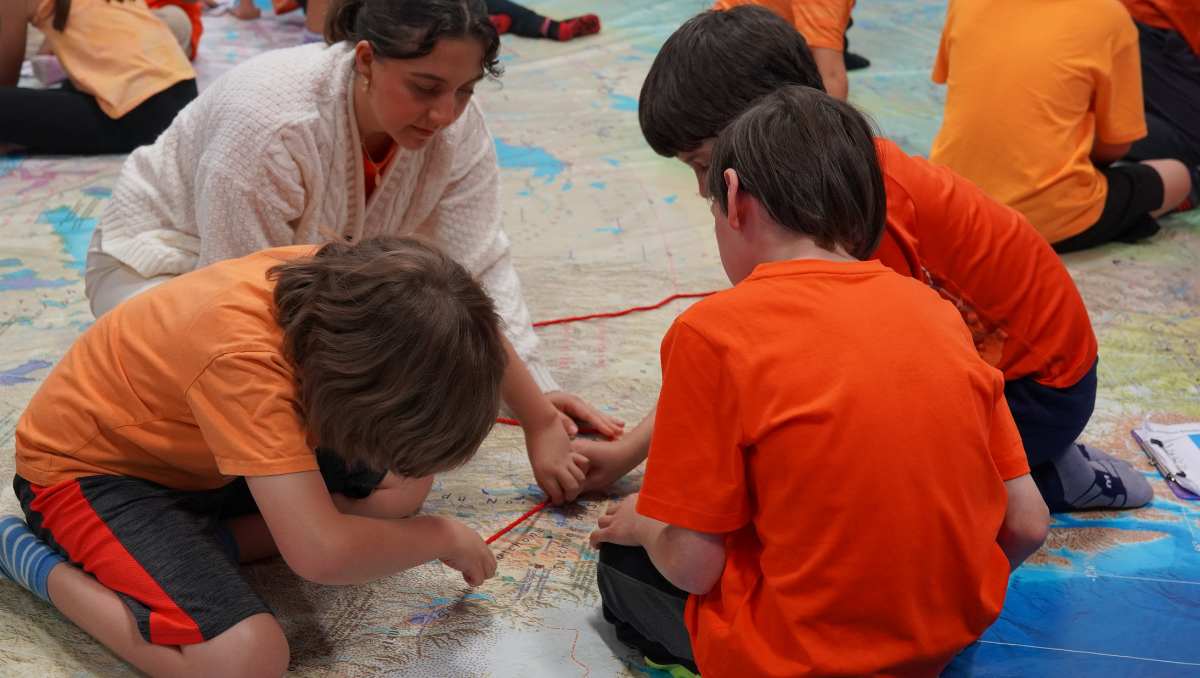
There is alignment between Indigenous ways of knowing and St. George’s foundational identity as Montreal’s pioneer progressive school. What modern educational research knows as “progressive pedagogy” — experiential learning, inquiry-based exploration, place-based study, and educating the whole child — is not new. These approaches reflect how Indigenous communities have approached teaching, learning, and mentorship for thousands of years.
When we teach through an Indigenous lens, we are not introducing an abstract theory; we are returning to holistic, time-tested practices that honour how human beings naturally learn best:
Learning is Relational and Reciprocal: Indigenous pedagogies teach that learning supports the well-being of the self, the family, the community, and the land. This directly mirrors our warm environment. We know that psychological safety and strong relationships are the prerequisites for academic and artistic risk-taking.
Learning is Experiential and Embedded: In traditional Indigenous approaches, children develop skills, awareness, and values by actively engaging with their environment. Furthermore, mental, physical, emotional, and spiritual needs are addressed as one connected whole.
How Indigenous Knowledge Lives in Our Classrooms
1. Land-Based Learning and Social-Emotional Growth
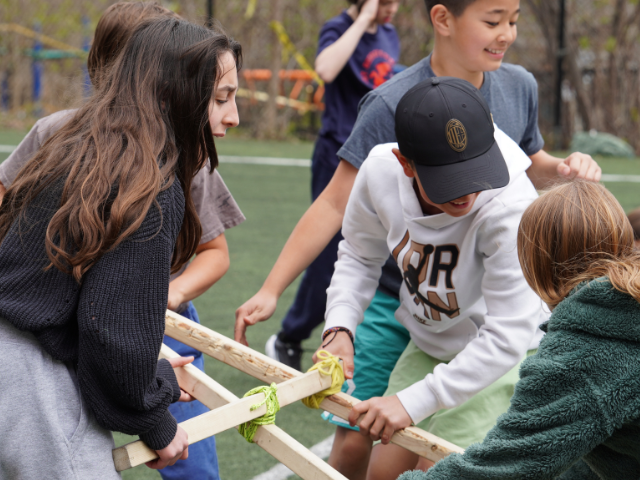
When our students engage in outdoor “sit-spots,” observe pollinators in science, or tend to a traditional Haudenosaunee “Three Sisters” garden, they are practicing land-based learning. Outdoors, social-emotional development happens naturally: students build perseverance when navigating a challenging climb, practice empathy when recognizing that a classmate might not be able to climb as high, and cultivate curiosity through direct observation of the world around them.
2. Literacy and Storytelling
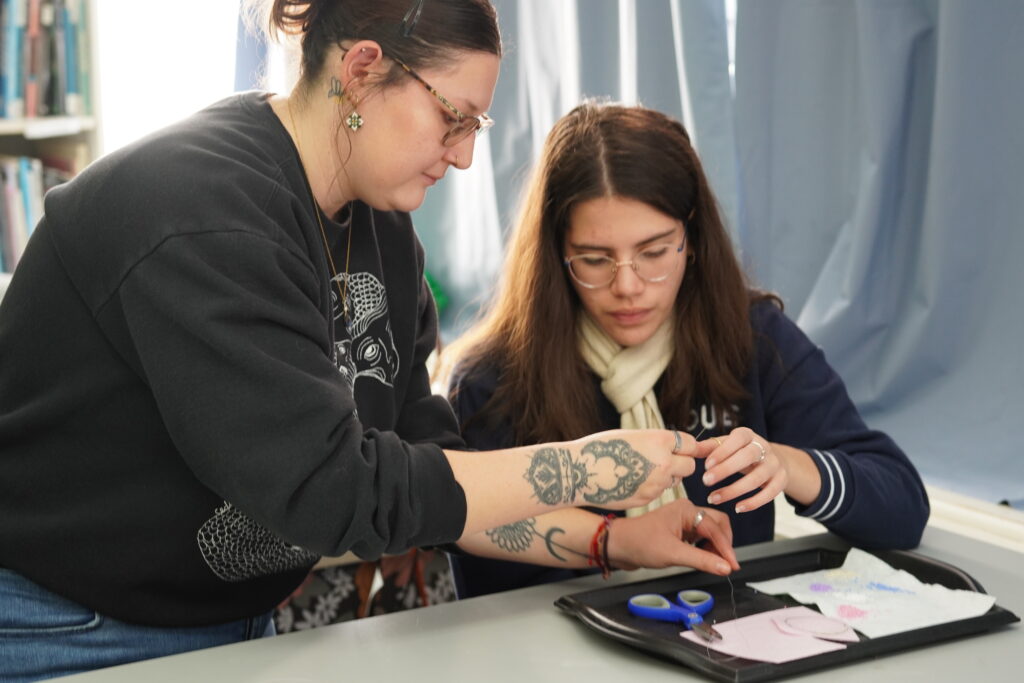
In our Language Arts programs, storytelling is treated as a vital tool for understanding ourselves and others. Using literature by Indigenous authors, such as Monique Gray Smith and Cherie Dimaline, we explore interconnectedness and reciprocity. Stories build empathy and teach students that language is not just a tool for academic assessment, but a bridge for human connection and environmental stewardship.
3. Sustainability in Action
Our commitment to environmental sustainability goes beyond recycling and composting. Grounded in Indigenous worldviews, sustainability becomes a lived, relational ethos: understanding that we do not own the land, but exist in a reciprocal relationship with it.
The Journey: From “What” to “So What” to “Now What”
Real educational transformation requires a thoughtful developmental sequence. In our curriculum planning, we guide students through three distinct stages:
1. The WHAT (Understanding): Students build an accurate, foundational understanding of Indigenous knowledge systems, histories, and traditions, as well as the honest truths of Canadian history.
2. The SO WHAT (Empathy & Reflection): Students examine social and historical biases, reflect on personal and collective histories, and understand why these truths matter to our lives today.
3. The NOW WHAT (Action & Leadership): Armed with historical context and deep empathy, our students are empowered to act as informed, ethical citizens who advocate for meaningful social change.
Shaping Purposeful, Empathetic Leaders
At St. George’s, challenging our learners to become critical thinkers means teaching them to look at the world through multiple perspectives. By integrating Indigenous knowledge systems into our day-to-day learning, we honour the truth of our history, elevate our progressive pedagogical practices, and enrich the intellectual and personal lives of every child.
Interested in St. George’s?
Learn more about our school and be the first to hear about upcoming events.
[YEAR ROUND] General Optins
Elementary School Campus
3685 The Boulevard
Westmount, QC H3Y 1S9
High School Campus
3100 Le Boulevard
Montréal, QC H3Y 1R9
Admissions
514-904-0542
admissions@stgeorges.qc.ca


© 2026 | Terms of use | Privacy policy | Code of Ethics