Learning How to Learn with Our Family Learning Series
Special Feature by Directors of Teaching and Learning Dani Jansen, High School and Laura Officer, Elementary School
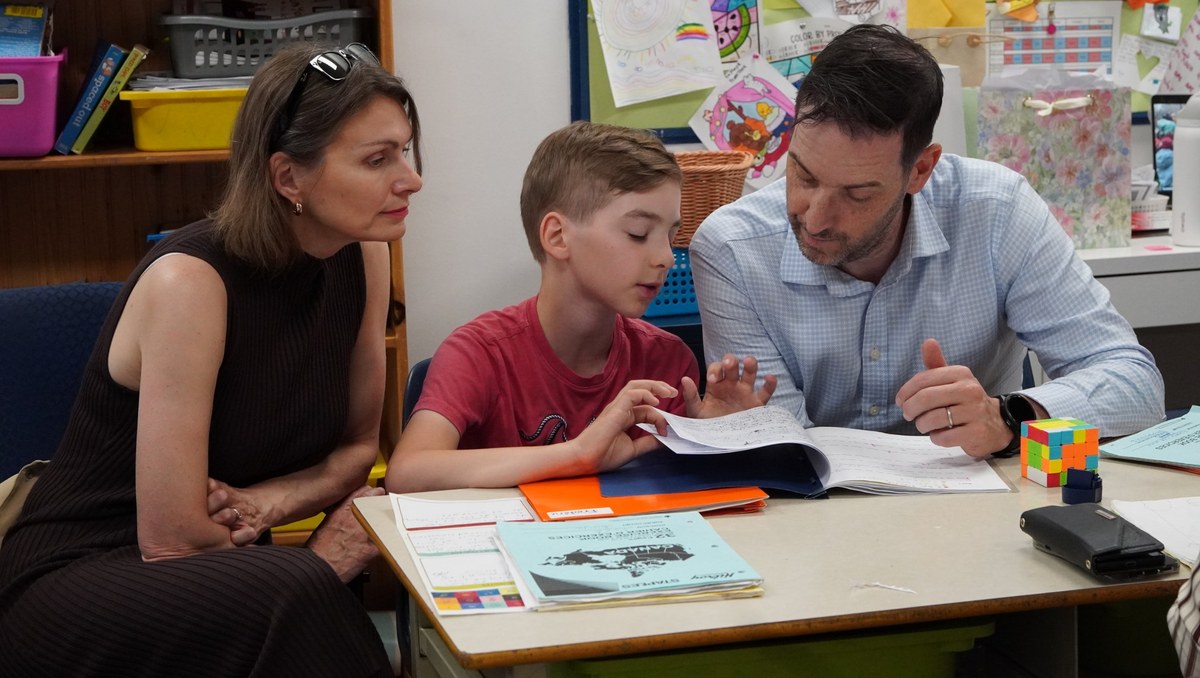
Last week, St. George’s Elementary and High School teams hosted two Family Learning Series sessions exploring how we assess growth, how memory actually works, and what parents can do at home when learning gets hard.
Picture a teenager sitting at the kitchen table the night before a test, armed with three colours of highlighters and a stack of meticulous notes. By bedtime, every second line on the page is glowing neon yellow or green. It looks like hours of hard work. Here’s the catch: the student feels confident, but that passive review they’ve done hasn’t actually prepared them for the assessment. They freeze when the teacher hands them the test the next day.
Or picture a different kitchen-table moment: a parent opening a first-term report card, scanning past the teachers’ comments to look at the numbers, and wondering why their child is performing below the class average.
In both moments, parents might ask the same question: How do I support my child without taking over?
Last week, our Elementary and High School teams devoted two evenings of our Family Learning Series to answering that exact question. On Tuesday, November 17, our Elementary School welcomed new families and Cycle 1 parents for an inside look at assessment and report cards. Two nights later, our High School gathered families online for Beyond Cramming: How to Study Smarter.
Different campuses and different ages, yet both conversations pointed to the same truth: real learning is hard work. And our job as teachers, parents, and guardians is to act as guides, helping students understand themselves as learners.
Why “Hands On” is “Minds On”
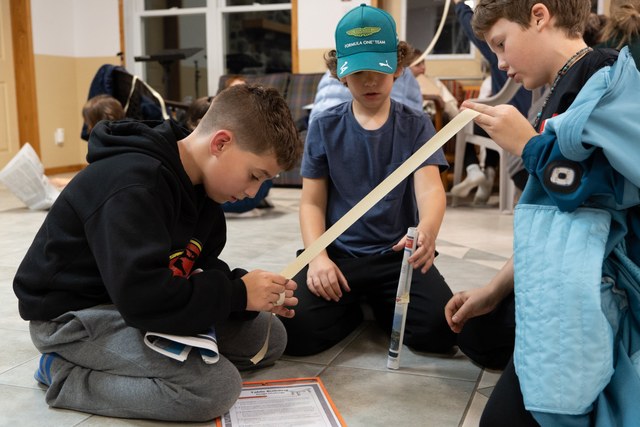
St. George’s has believed since 1930 that students learn best by taking part in their own learning. Our founders moved away from rote memorisation because it rarely led to lasting understanding. Today, research on how we learn shows they were right (Brame, 2016). Nearly a century later, research into the science of learning is proving them right (Brame, 2016).
Across both sessions, our educators came back to two foundational concepts: metacognition (knowing how you learn) and a growth mindset. As psychologist Carol Dweck (2026) reminds us, students with a growth mindset understand that intelligence isn’t fixed; it grows through effort, smart strategies, and thoughtful coaching. When a child hits a wall in math or struggles to sound out a word, that friction isn’t a verdict on their ability. It’s the feeling of a brain building new connections. As caring adults, we can sit alongside them as they experience the struggle of learning something new, but we deprive them of learning if we try to make the experience easy or frictionless.
Elementary School: Seeing the Whole Child
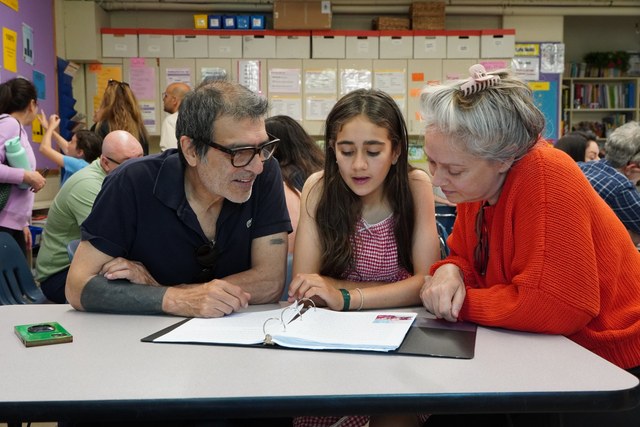
Maude Bradley, Learning Enrichment Coordinator, Elementary School, Aidan De Jean, Elementary School Principal, and Laura Officer walked Elementary families through how our teachers build a comprehensive picture of each student, an approach rooted in a whole child approach (Learning Policy Institute, 2023), which is also foundational to our progressive philosophy.
Rather than relying on a single quiz or worksheet, Elementary teachers practice triangulation of learning evidence. Throughout every term, aligned with the Quebec Education Program (QEP), they gather three distinct kinds of proof:
Observations: Teachers watch students in action during everyday classroom life.
Conversations: Teachers hear how a child is actually thinking through quiet, one-on-one reading check-ins and math strategy chats.
Student work and productions: Pieces created over time show how each student’s learning grows.
When report cards go home three times a year—alongside an October progress report and two parent-teacher conferences—they are meant to spark conversation, not anxiety. In Kindergarten, narrative comments trace growth across the five competencies of the Preschool Cycle Program, from motor development and self-awareness to relationships and language. In Grades 1 to 6, presenters encouraged parents to read the teacher’s written comments before looking at the grade, remembering that grades reflect clear evaluation rubrics rather than a race against the class average. Twice a year, comments on Cross-Curricular Competencies also capture the skills that rarely show up on a spelling test: how a child exercises critical judgment, organises their work, communicates, and collaborates with peers.
The takeaway for parents of Elementary School students: every child’s timeline looks different. On report card night, the best thing you can do is listen openly, celebrate effort, and treat mistakes as normal.
High School: Trading the Highlighter for Real Recall
By High School, the nightly homework dynamic shifts. Teens want independence, parents want to help without nagging, and everyone wants to avoid the Sunday-night cram session.
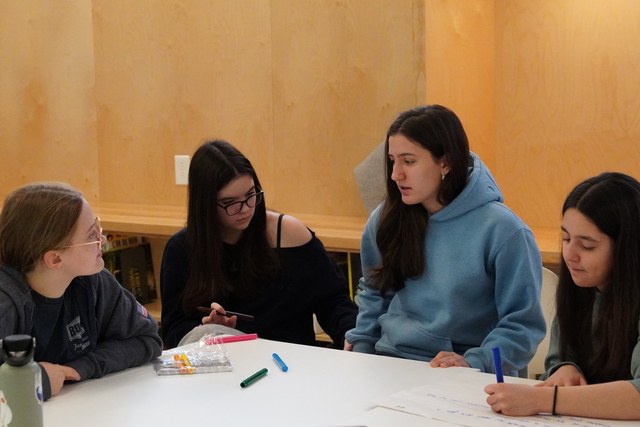
On Thursday evening, Dani Jansen, Melissa Dair, Coordinator of Learning Enrichment, High School, Kate Hudson, Learning Specialist Grades 7–8, and Sascha Smith, Math Teacher and Learning Coachunpacked what cognitive research tells us about how adolescent brains retain and recall information (Agarwal, 2025).
Remembering isn’t like saving a file to a hard drive; it’s an active, multi-step process. When students reread their notes or highlight a textbook chapter three times, they fall into a familiar trap: everything on the page looks recognizable, so they think, “I know this.” Then the test arrives, and nothing comes out. So what should students do instead? The best strategy is self-testing (Cho, 2026). Pulling information out of memory is what strengthens recall.
Instead of telling teens to “go study,” families left the session with four concrete self-testing tools students can use:
The 60-Second Brain Dump: Close the binder, take a blank piece of paper, and write down everything you remember about a topic before opening your notes to see what you missed.
Out-Loud Flashcards: Say the full answer out loud before flipping the card.
Teach Someone at Dinner: Explain a concept from Science or History in plain language at the kitchen table without peeking at a screen or notebook.
Write Your Own Quiz: Predicting what questions might show up on an evaluation, and writing them yourself, is half the cognitive work. While AI can be a useful starting point for students just learning how to self-test, designing their own questions builds deeper understanding.
Pair self-testing with spaced practice (short, focused review sessions spread across several days rather than one marathon night) and retention climbs while stress drops.
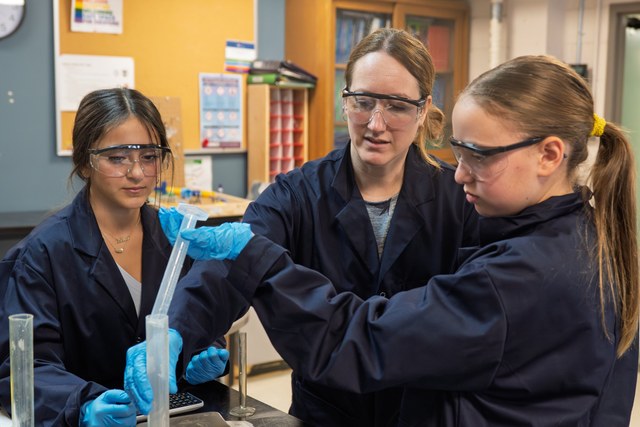
Getting Students Ready
We also tackled a question High School families often ask: If students don’t write formal exams in Grades 7 and 8, will they be ready when exams arrive later?
Our answer is yes, precisely because we build the habits before the stakes get high. In Grades 7 and 8, skipping formal exam blocks lets us focus on frequent, low-stakes retrieval. Students learn how to study, manage their time, and recover from mistakes without the anxiety that often shuts down working memory. By the time formal exams are introduced in Grades 9 to 11, active study routines are already part of their toolkit.
In a spotlight on Math evaluations, Sascha Smith busted another common myth: using a review sheet in math isn’t cheating. Cognitive load research (Gillmor et al., 2015; Swanson et al., 2025) shows that a well-crafted reference sheet frees up working memory so students can focus on higher-level problem-solving rather than panicking over a forgotten formula. The catch? A review sheet only works if the student builds it themselves and includes only material they actually understand. Copying a friend’s or tutor’s sheet won’t cut it.
We Are Crew
In conversations at both campuses, what stood out most to our Learning Specialists was how aligned home and school really are. We hold high expectations for the young people in our care, which we know is only possible because we create warm, respectful environments where those young people can thrive.
Whether your child is in Grade 1 or Grade 11, you don’t need to be a content expert at the kitchen table. You can protect sleep, limit digital distractions during short study blocks, invite your child to co-design their workspace and schedule, and lean on the three reflection questions our students practice from Kindergarten onward: What? So what? Now what?
When home and school pull in the same direction, children feel it. They are able to grow their curiosity, resilience, and confidence.
Thank you to everyone who joined us for last week’s Family Learning Series. If you have questions about report cards, study strategies, or our assessment philosophy, please reach out anytime to our Learning Enrichment teams on either campus. Additionally, we would love to hear your feedback as we develop the next session of our Family Learning Series.
References
Agarwal, P. K. (Ed.). (2025). Smart teaching stronger learning: Practical tips from 10 cognitive scientists. Unleash Learning Press.
Brame, C. J. (2016). Active learning. Vanderbilt University. https://cft.vanderbilt.edu/wp-content/uploads/sites/59/Active-Learning.pdf
Cho, K. W. (2026). How students study: Who uses what strategies and does it matter? Active Learning in Higher Education. https://doi.org/10.1177/14697874261437063
Dubinsky, J. M., & Hamid, A. A. (2024). The neuroscience of active learning and direct instruction. Neuroscience & Biobehavioral Reviews, 184, Article 105737. https://doi.org/10.1016/j.neubiorev.2024.105737
Dweck, C. (2026). Growth mindset. Center for Teaching and Learning; Stanford University. https://ctl.stanford.edu/students/growth-mindset
Gillmor, S., Poggio, J., & Embretson, S. (2015). Effects of reducing the cognitive load of mathematics test items on student performance. Numeracy, 8(1), Article 4. https://doi.org/10.5038/1936-4660.8.1.4
Learning Policy Institute. (2023). Whole child education. Learning Policy Institute. https://learningpolicyinstitute.org/topic/whole-child-education
Miller, J. P. (2019). The holistic curriculum (3rd ed.). University of Toronto Press.
National Academies of Sciences, Engineering, and Medicine. (2018). How people learn II: Learners, contexts, and cultures. The National Academies Press. https://doi.org/10.17226/24783
Swanson, H. L. (2026). Bidirectional effects between working memory and math in children with and without math disabilities: Does working memory or math drive the system? Journal of Experimental Child Psychology, 263, Article 106404. https://doi.org/10.1016/j.jecp.2025.106404
Interested in St. George’s?
Learn more about our school and be the first to hear about upcoming events.
[YEAR ROUND] General Optins
Elementary School Campus
3685 The Boulevard
Westmount, QC H3Y 1S9
High School Campus
3100 Le Boulevard
Montréal, QC H3Y 1R9
Admissions
514-904-0542
admissions@stgeorges.qc.ca




© 2026 | Terms of use | Privacy policy | Code of Ethics