Learning That Lasts
We are used to instant answers. A quick search delivers information in seconds. But information and understanding are not the same. Understanding has to be built. It takes time, mistakes, and the satisfaction of creating something real. That belief shapes how we teach, how we plan, and what we ask of our students every day.
From Concept to Creation
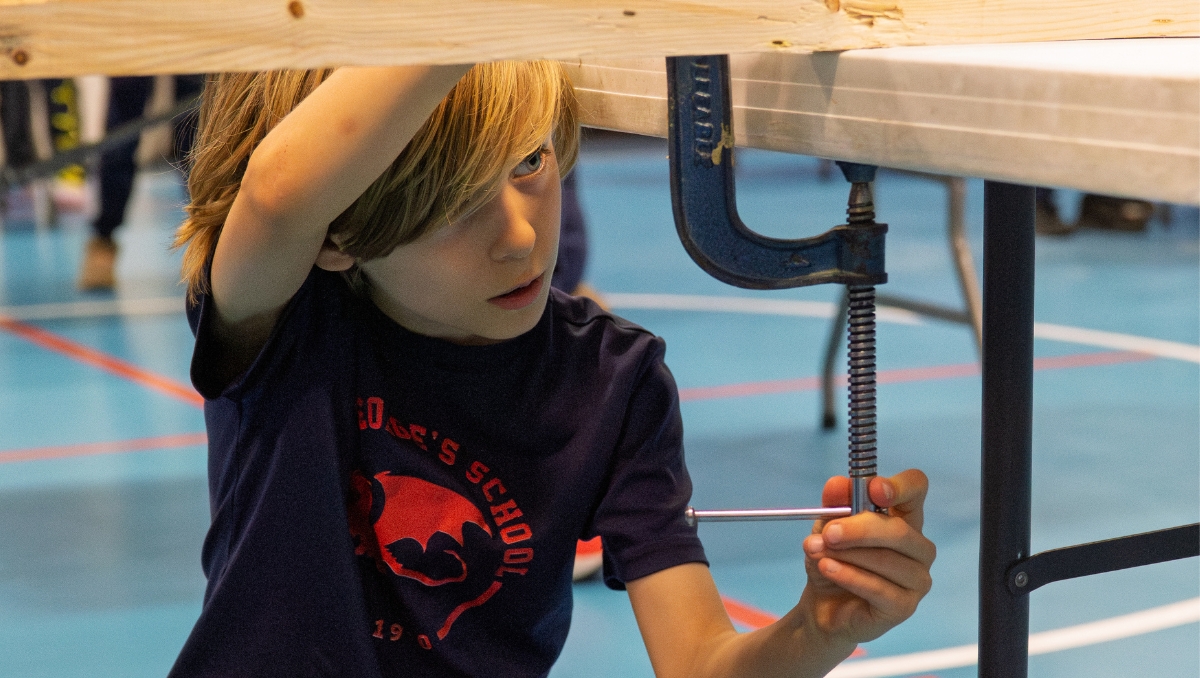
A generous gift from a longstanding St. George’s family brought more than $10,000 in Milwaukee® tools to both campuses. They live in the Elementary School Maker Space and the High School Metal Shop, and they are in use daily: for STEAM projects, robotics builds, art installations, and design challenges across disciplines.
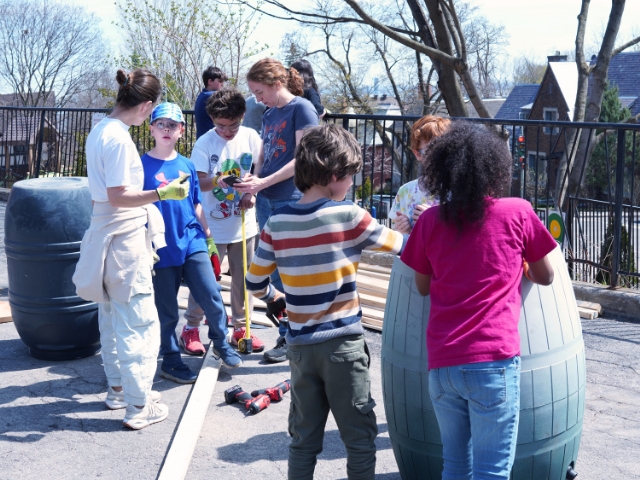
At the Elementary School, Grade 3 students built wood frames to map imaginary islands and designed rain barrels for their outdoor gardens. “Watching students take pride in their completed projects is one of the most rewarding experiences,” shares Erin Ryan, Grade 3 English and Math Teacher.
The tools matter. But what they represent matters more. Safe tool use is taught and practised not as a standalone skill but as part of the work itself. Students learn to handle a drill in the same moment they are building something they care about. That combination (real materials, meaningful stakes, and shared purpose), is what turns a lesson into a memory.
The Courage to Try
Some of the most important learning happens in the moments before you know if something will work.
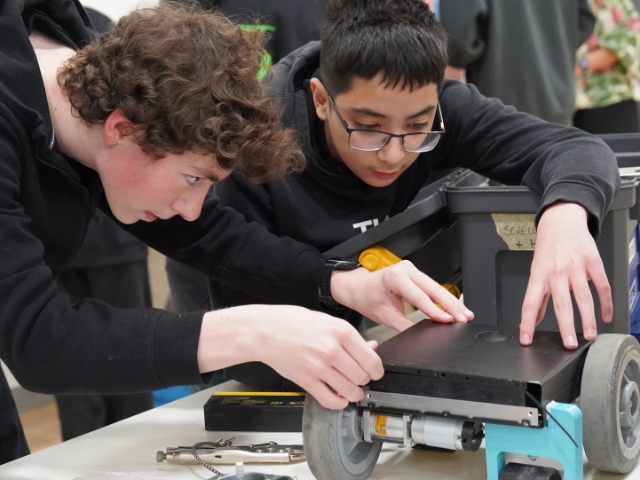
When the Robotics team arrived at the Canadian Robotics Competition, they were one of the only high schools in a sea of CEGEPs and technical colleges. Minutes before a heat, students were still tightening drive motors and pushing code updates. Months of work came down to those last adjustments. They reached the finals. They took home multiple podium finishes. But the deepest learning had happened long before competition day, in the late nights, the failed prototypes, and the accumulated confidence of solving problems no one had solved for them.
The team’s success was built on creativity under pressure. Even their award-winning kiosk began as a constraint. With limited space to build, the team engineered a modular structure that could be assembled, transported, and disassembled, using repurposed election posters as material. The limitation became the design.
That iterative process: try, fail, reflect, try again, is not unique to Robotics. It runs through everything. Grade 6 students at the Leadership Retreat navigated orienteering courses and designed engineering prototypes over three days. In the Hardware Hackers pod, students turned scrap wood into furniture and donated the proceeds. The setting changes. The instinct doesn’t.
Collaborative by Design
The deepest learning at St. George’s rarely happens alone.
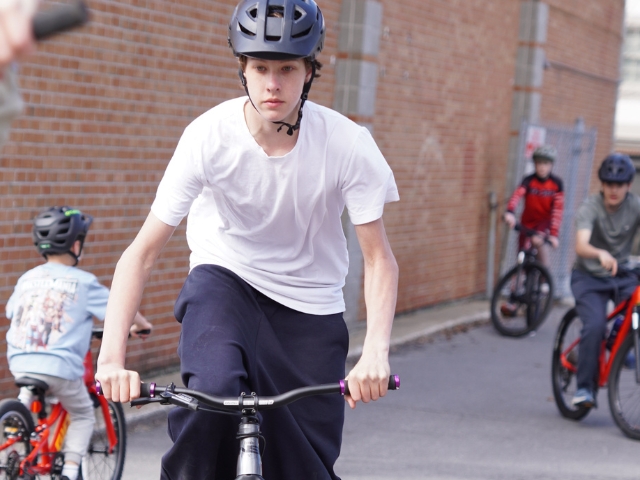
During the school’s annual Bike Fest, a Grade 1 student watched a volunteer mechanic diagnose and repair their bike, step by step. Minutes later, the student was riding off down the track, cheering with joy. Nearby, High School students coached younger peers at the jump ramp. The scene captured something essential. When students learn alongside people who are genuinely invested in them, whether a mechanic, a peer mentor, or a neuroscientist from the parent body, the learning carries a different weight. It is connected to inspiring mentors and shared purpose.
This is equally true in the classroom. In Grade 8 Geography, students spent a unit examining Montreal’s rental crisis alongside John Tessier from Advocacy for Montréal. The conversation bypassed the usual generalizations. “I never really understood how complicated this issue is,” explained one Grade 8 student. “It made me think about how I can react to people, instead of making assumptions.”
Building a Better World
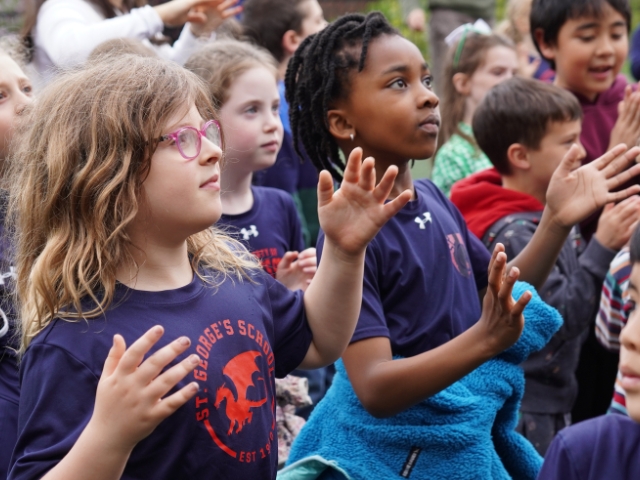
Purpose is something lived, emerging when students are given practical problems, vibrant communities, and the trust that their contribution matters. Sometimes it looks like a school-wide climate march. Sometimes it is much smaller and closer to home.
Kindergarten student Oliver S. wanted to honour a classmate he had never met. Liam Armstrong passed away in 2014, and every May, St. George’s pauses to remember him the way he would have wanted: with dancing and cupcakes. Oliver S. wanted to do more. He and his family organized a chocolate bar drive, and seventeen of our youngest learners sold door-to-door, raising a record $3,514 for the Liam Armstrong Fund for Pediatric Oncology.
Oliver’s instinct to see a need and reach towards it also runs through the school’s environmental work. Grade 5 students designed and built robots with one goal: reducing human impact on the planet. Students from Kindergarten to Grade 6 cleaned the Lachine shoreline together, pulling styrofoam, old cans, and rusted grills from the water’s edge. More than 1,000 students from five schools took to the streets for the annual Rising Voices Climate March. Different projects, different grades, different disciplines. All pointing toward the same belief: the world our students want to live in is one they are willing to build.
Learners who feel genuinely motivated, who trust their teachers and their peers, who take risks and reflect on what they find, carry something with them that lasts. When our students are asked about their school, the response is clear: nine in ten of our Elementary School students feel a genuine interest in their daily classes, while our High School students report a sense of belonging and confidence that stands out. This data is encouraging. But it is not the goal. The goal is to raise compassionate community members.
This is what we are working towards. Achievers who care about something beyond themselves. Students who understand that their ideas have weight, that effort leads somewhere, and that the community around them will show up when they do.
Interested in St. George’s?
Learn more about our school and be the first to hear about upcoming events.
[YEAR ROUND] General Optins
Elementary School Campus
3685 The Boulevard
Westmount, QC H3Y 1S9
High School Campus
3100 Le Boulevard
Montréal, QC H3Y 1R9
Admissions
514-904-0542
admissions@stgeorges.qc.ca




© 2026 | Terms of use | Privacy policy | Code of Ethics